Saturday, November 07, 2009

Introducing Renee Riva

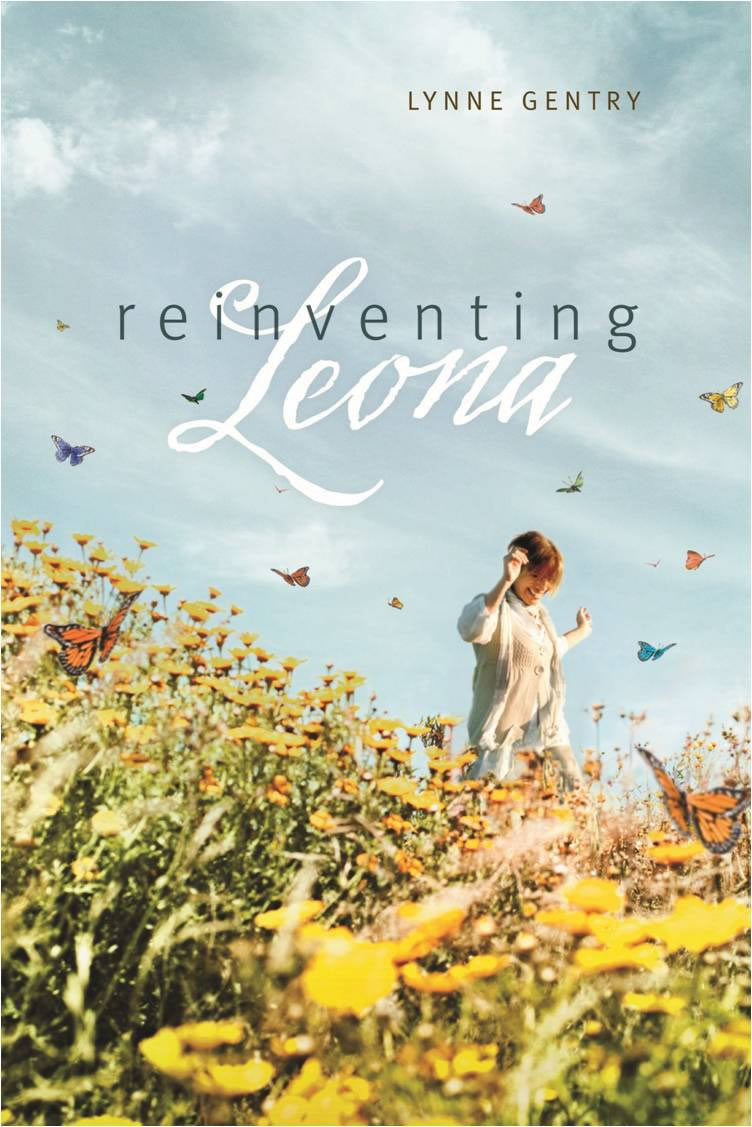
I've discovered a wonderful new author in Renee Riva, and I'd love to share her books with you. Her first novel, Saving Sailor, features main character A.J., a ten-year-old, quirky girl who's kinda like Scout in To Kill A Mockingbird. She's an animal lover to a fault (her parents won't let her visit the pound ever again), has an animal cemetery where she gives proper burial to the various creatures she finds on her Idaho island home.

Her Italian family is also really quirky, but that's what makes us like them. They're eccentric yet love each other deeply.

In my official book review of Taking Tuscany, the sequel to Saving Sailor, I say:

"Proficiently mixing deeper themes and spiritual truths alongside the humor, Riva has crafted
a lovely tale of longing and belonging readers of all ages will savor." Read my full review here.

In an interview I did with Renee for TitleTrakk.com, I asked her about Saving Sailor and its sequel:

Me: I hear both Saving Sailor and Taking Tuscany are based loosely on some of your own experiences growing up. How much is fiction and how much is real life?

Renee: I would say that the majority of SAVING SAILOR was based on real life—either from my own experience, or those around me. TAKING TUSCANY included similar emotional experiences I’d encountered in my teens, but I changed the setting and scenarios to fit the story. In other words, I went through the majority of what A.J. went through emotionally in moving, changing schools, and the social pressures of school—just not in Italy. In the back of TAKING TUSCANY in the “After Words” I share some of those experiences.

Me: Was it always your intent to write a sequel to Saving Sailor or did you find yourself struggling to come up with another book?

Renee: I always hoped to write a sequel, but my idea was to have A.J. return to Indian Island at age 18, when Danny is 21. I thought it would be neat to build on the great friendship they’d had as children and add a little amore`. My publisher liked that idea too, but they also wanted to know what happened in Italy during those years apart. That was a bit of a challenge, so I immediately booked a trip to Mexico and pretended to be on the Italian Riviera to help inspire some ideas. That’s where I wrote about The Grand Old Sea Palace; the parasailing scene and the pirate ship in the pool. We really did have a pirate ship in our pool. I had already been to Tuscany eight years earlier so I hung my photos of Tuscany all over my walls while writing and was able to put myself back in that setting.

Me: An interesting part about these novels is that you chose to age your character A.J.. How did you approach writing her slightly older voice in Taking Tuscany? Was that difficult in any way?

Renee: I was a little bit leery of turning A.J. into a typical teenager because I wasn’t the most pleasant teen myself at age fourteen. But I knew she had to get older to be able to write that third book where she returns as an 18 year old, so I decided that if I was going to spend my winter with a teenager in my head, it was going to have to be someone I could enjoy being around that long. I had to pull up a lot of attitude from my past, but also made A.J. the fun quirky girl she was before, only older. I tried to project what that same kid would be like 4 years older. I wanted to keep some of her charm and humor too so I could bear writing about her and my readers could enjoy reading about her.

Luckily for us, there's a third novel coming. Heading Home (April 2010, David C. Cook) finds A.J. eighteen-years-old and returning to her beloved Idaho home ... and of course, Sailor.

Check out the rest of my interview with Renee over at TitleTrakk.com!

Thanks again to Renee Riva for appearing, courtesy of Provato Marketing, for other stops on the Renee Riva blog tour please check www.provatoevents.com.

Thursday, November 05, 2009

What Novelists Do When They Can't Write

I found this video over at Angela Hunt's blog. This is what novelists do when they can't figure out how to write. Since this is National Novel Writing Month, Angie put it together in honor of those banging away at their 50,000 word rough drafts. I went away chuckling and encouraged! I hope you do too.

Friday, October 30, 2009

Writers Are Like Painters

When I was a teen, I took up oil painting. One of my favorite shows was The Joy of Painting on PBS, and I figured if Bob Ross could make happy little trees, maybe I could too. For awhile I actually thought I was going to be a painter rather than a writer, but that was before the writing bug bit me really hard. But here's the thing, and probably why I was confused for a little while---writing really is like painting.

These days I occasionally take up my oil painting between projects. Even though they're different (one changes a canvas, the other a computer screen) writing and painting have many similarities. One of the paintings I hope to finish someday features a rough looking cowboy (he's pictured above). He's been a work in progress for longer than I care to admit, but as I work on this painting, here's what I'm noticing:

Underpainting/rough draft

For this project I started with an acrylic underpainting, made up mostly of grays. It's like a rough draft. I can see the outline of what I want to accomplish, and the hints of where I want to be, but in no way is it complete.

Laying down the color/second draft
Then it's onto the color. I applied it generally with little thought to detail. The important thing was to get the darker colors where the shadows would be, and the brighter colors where the light would hit this character's face. Second drafts are like this for me. Since I tend to underwrite, often I'll be going back and adding layers of dialogue, character thoughts, etc. It's at this point I'll probably doubt my ability to see this project through. What was I thinking?

Getting the likeness/third draft
This is where things get tricky. This portrait must look like a human being. All the nuances of my character's face must be just right. It's the same with writing. The story needs to make sense. The character's motivations need to ring true. I'll need to sculpt away the excess, keeping only the important.

The fine details/final draft
I enjoy this step the most in both painting and writing. I can finally see I'm going to make it! I'm going to complete this project. The image in my head has finally (if I've done everything right) materialized. It's now I really step back and examine to make sure I'm satisfied. There might be some fine tuning still. I might decide I have to make the nose or chapter longer. That's okay. The hard part is done. The hardest part now is knowing when to sign the picture or type "The End".

[This is an edited version of an older blog post I wrote that's now being featured at the Scribble Chicks blog.]

Friday, October 23, 2009

Thicker than Blood back cover and spine unveiled!

I'm very excited to share with you the final cover, spine and back cover of my January 2010 Tyndale House novel Thicker than Blood. Click on the image to enlarge it and see how the designer Jennifer Ghionzoli managed to make the most beautiful cover ever! (I'm not biased at all, am I?) I LOVE the way this book looks like a rare, leatherbound book. So perfect as a used and rare bookstore plays a big role in this story. If you like what you see, and care to pre-order, the book is available to do just that at these fine online retailers: Amazon.com, Christianbook.com, Barnesandnoble.com, Borders.com, and Powells.com.

Thursday, October 22, 2009

Janet Kobobel Grant (Advice for Novelists, Part 107)

Here's another post in my Advice for Novelists series in which editors, authors, agents and publicists answer the question:

"If you could say one thing to aspiring novelists, what would you say?"

This time around, agent Janet Kobobel Grant gives us a poignant piece entitled "Begin at the Beginning".

I love that the Bible begins in just the right spot: “In the beginning God created.” Chaos succumbs to order. It’s the ultimate conflict! Genesis’s beginning makes so much sense to us; I can’t imagine a better opening.


Unfortunately, the choices aren’t so obvious when it comes to our own writing. I remember hosting a dinner table at the Writing for the Soul Conference a couple of years ago and asking each person what he or she was working on.


One woman recounted her novel’s storyline and then asked me if I thought she should cut the first couple of pages, which some of her critique partners had suggested. She was having trouble murdering those darling paragraphs that she had labored over for months.


I do believe a hush fell over the table as I said, “I think you should start the story in the middle of the manuscript. Everything before that point is backstory.”


Everyone at the table, including me, wondered how the writer would respond to such a radical concept. She chewed on the idea, and as she did, her expression lightened, and she exclaimed,
“That’s perfect! Why didn’t I see it before?” Then she rattled off how that would open up new vistas in the novel.

Now, I wish I could proclaim myself some sort of genius for having made the suggestion, but the truth of the matter is that I’ve read enough manuscripts that I know starting in the wrong place is a common malady.


I’ve been pondering why that’s the case, and I’ve come up with this premise: The writer is so immersed in the story, has done so much research, and knows the characters so well, that she is tempted to do a brain dump in the book’s opening. So much detail is clogging the writer’s mind that she wants to bring the reader up to speed right off.


What the novelist forgets is that the reader isn’t ready to discover the complex underlying motivations for the protagonist’s first actions. Rather than introducing the character to us, the author in essence pulls out the character’s entire psychological profile. I’m so not ready for that! Why, I’m not even on a first-name basis with the character yet. Ease me into the relationship with a gentle introduction.


I also don’t need the complete physical description. Don’t provide me with any until it naturally fits in the story.


In addition to wanting to provide too many details about the character (or characters), writers are tempted to start with the backstory. I just finished reading a manuscript in which the story began with a woman calling a restaurant to make a reservation. The next thing I knew, I was being told the restaurant owner’s life history. Totally backstory stuff. I didn’t care yet. I hadn’t even met that character; I’d only been introduced to the woman phoning the restaurant, which made the backstory material all the more confusing for me. I wasn’t sure who the novel’s key character was.


The more complex the story, the more tempting to provide too much information too soon. The political atmosphere, the setting, and the main characters all demand to be front and center on the first pages, which quickly turn into a traffic jam, with the poor reader overwhelmed by all the detail.


As a reader, what I look for are “anchors” that settle me into the story and keep me from being carried off by strong winds. I want to care about the protagonist; give me reason to do so. I want to know the elemental details about the story’s setting. And I want to know what conflict the character is facing right now. Drop the anchors in the middle of a pensive moment. Fill in details later.


How do you know where to start your novel? Often it’s in the middle of the story as you’ve outlined it. Go ahead, be daring, give it a try.


I’m currently reading Leif Enger’s
So Brave, Young and Handsome. The story had me from the get-go. The protagonist is sitting on the porch of his home, trying to write a novel. He hates his character. Then a man, standing up in his boat, rows past on the foggy river, and the author hears the Siren call of doing something besides write his novel. Two straightforward conflicts are introduced: the writing isn’t going well; the man in the boat refuses to stop and talk.

Every author’s challenge is to begin at the beginning, if he only can figure out where that is! The point to remember is that often the beginning isn’t where the writer wants to start. Therein lies the challenge.


--Janet Kobobel Grant understands the inside scoop on publishing both as an author, publishing insider, and literary agent. She has written numerous books, helped to launch Here's Life Publisher, managed her own imprint with Zondervan, and served as managing editor of books for Focus on the Family. She established Books & Such Literary Agency in 1996 after working in the book publishing industry for more than twenty years.

Friday, October 16, 2009

Author Melanie Wells's ambitious campaign

I've been a fan of author Melanie Wells ever since I read her first novel When the Day of Evil Comes (Multnomah). So when she announced the I Told Two Friends campaign, I knew I wanted to help spread the word.

Here's a special message from Melanie about the ambitious I Told Two Friends campaign:


Hi. It’s me, Melanie.

Someone asked me recently – why literacy? Why would anyone give away $100,000 (100% of my profits from sales of My Soul to Keep) to teach illiterate adults how to read? (Okay – fair question. I admit it sounds a little crazy. It’s not like I’m dripping with cash).

Two words: compassion fatigue

Here’s the deal. I support several causes vigorously and regularly (and so should you!) In fact, if you’ll notice, each of my books centers around a cause. When the Day of Evil Comes concerns family violence and suicide. The Soul Hunter references violence against women and lost teens. And My Soul to Keep is about child abduction. I don’t write about these things because they’re morbid. I write about them because they’re IMPORTANT.

But the truth is, I sometimes feel exhausted and overwhelmed by the number of problems out there. Don’t you?

Illiteracy, it turns out, is linked to just about every evil under the sun. Child abuse, poverty, disease, hunger, violent crime, violence against women, HIV/AIDS… . You name it. In fact, illiteracy is one of the FEW things in this world you can actually do something about! A little money goes a LOOOOONG way. And the ripple effects are exponential.

Did you know 33 million adults in the United States can’t read at an 8th grade level? Do the math, folks. That’s 10% of our population. Wow.

17 million American adults can’t read well enough to earn a living wage.

62% of prison inmates are illiterate. Imagine getting out of jail and trying to make a new life for yourself when you can’t even fill out a job application. Do you want that guy back on the street with no job and no skills? Or do you want him to have every opportunity to become a productive member of society?

774 million adults worldwide are illiterate. 2/3 of them are women.

If a mother can’t read, chances are her children won’t be readers either.

It all adds up to one simple thing. A literate population is a healthier, safer, and more productive population.

If you’re reading this, I guarantee you that you take the ability to read this sentence for granted. Millions of other Americans can’t read it. They can’t read the aspirin bottle either. Or the street signs. Or a note from their kid’s teacher.

Most of us are completely unaware of this shadow population. How is it possible that millions of adults in the richest country in the world can’t read? (Click on Rosetta’s story. She’ll tell you all about it.)

The I Told Two Friends campaign was designed to give you a simple, painless, fun way to share the gift of literacy with millions of Americans. All you have to do is buy a couple of books, give them to two friends, and ask them to do the same (and so on, and so on, and so on…).

25 bucks and two friends can change the world. YOU can change the world.

Join us and be part of the solution!

Melanie

Visit the I Told Two Friends website to learn more!

Sunday, October 11, 2009

What would you like to see at this blog?

Hi, friends! I need your help. I want to make this blog a fun and inspiring place to hang out. But I sometimes don't know the type of posts everyone would most like to see. So, if you have a moment, please respond to this poll. And you can feel free to leave comments too. Thanks so much!

Friday, October 09, 2009

How can you know you're called to write? (Scribble Chicks)

How can you know God’s calling you to be a writer? It's a question all of us have asked ourselves. If you knew you were called, then you'd stick through the tough times a lot easier, right? You'd press on and pursue your dreams knowing you were on the right track.

Read the rest of my post on this subject over at the Scribble Chicks blog this week!

Thursday, October 08, 2009

Andrew Peterson (Advice for Novelists, Part 106)

Welcome to another edition of my Advice for Novelists series in which editors, authors, agents and publicists answer the question:

"If you could say one thing to aspiring novelists, what would you say?"

Here's musician and author Andrew Peterson's response:

“Don’t write bad books.” Which is to say, don’t settle. Aspire to be an excellent writer, or don’t write at all.

--Andrew Peterson, author of the YA fantasy series The Wingfeather Saga. Visit his website to learn more about his books and music.

Tuesday, October 06, 2009

Intervention by Terri Blackstock

As a fan of the tv show Intervention, I was immediately drawn to this title by the talented Terri Blackstock. I plan to have a full review up at TitleTrakk.com soon, but suffice it to say this was a suspenseful read! It kept me turning the pages for sure. Bravo, Terri!

ABOUT THE BOOK


Barbara Covington has one more chance to save her daughter from a devastating addiction, by staging an intervention. But when eighteen-year-old Emily disappears on the way to drug treatment—and her interventionist is found dead at the airport—Barbara enters her darkest nightmare of all.

Barbara and her son set out to find Emily before Detective Kent Harlan arrests her for a crime he is sure she committed. Fearing for Emily’s life, Barbara maintains her daughter’s innocence. But does she really know her anymore? Meanwhile, Kent has questions of his own. His gut tells him that this is a case of an addict killing for drugs, but as he gets to know Barbara, he begins to hope he’s wrong about Emily.

The panic level rises as the mysteries intensify: Did Emily’s obsession with drugs lead her to commit murder—or is she another victim of a cold-blooded killer?

If you would like to read the first chapter of Intervention, go HERE

Watch the book Trailer:

Friday, October 02, 2009

Writing Helps that Won't Break the Bank (Scribble Chicks)

Let's face it. If you go into this writing profession expecting to become rich and famous you'll probably be sorely disappointed. Most writers keep their day jobs.

We usually can't go out and by the latest MacBook or expensive writing desk. But don't let this discourage you! There are so many cheap (or free) writing helps that can make the journey a little easier. Here are a few I've found:

1. Google Maps

I can't tell you how excited I was when editing my novel to realize I could actually see the street view of where I wanted to set my scenes. Not every street is available, but in major cities they are. In one scene, I had a character who traveled to the Albuquerque Greyhound bus stop. I looked it up on Google Maps and was actually able to see the Alvarado Transportation Center. This prompted me to research the place a little more and add some description I wouldn't have known to include otherwise. We're no longer limited if we can't travel to where our stories take place! http://maps.google.com/

Read the rest of my post over at the Scribble Chicks blog to learn 3 more of my favorite writing helps!

Monday, September 28, 2009

Kevin Kaiser (Advice for Novelists, Part 105)

Welcome to another edition of my Advice for Novelists series in which editors, authors, agents and publicists answer the question:

"If you could say one thing to aspiring novelists, what would you say?"

Finish things. The notebook you have on your desk that's crammed with story ideas, the meticulously plotted Dramatica Pro storyboard, the color coded index cards--none of it matters if you can't finish. Like most things worth doing, writing is an act of the will that's initially set in motion by the nudge of inspiration. The rest is hard work.

--Kevin Kaiser, writer and literary brand manager for Ted Dekker. Visit his website (KevinSKaiser.com) for more info.

Friday, September 25, 2009

My Fave Novels (Scribble Chicks)

I'm talking about my favorite novels today over at the Scribble Chicks blog. Wanna know what they are? I'll give you the first one here, and they head on over to read about the other three.

Piercing the Darkness
by Frank Peretti

I first read this novel when I was twelve or thirteen, and I was blown away. I'd never read anything like it. I credit Piercing the Darkness for inspiring me to write Christian fiction. I loved how Peretti created a compelling, suspenseful story ... and yet wasn't afraid to shine the light of truth. He wasn't ashamed to share the gospel in his novels either. I really admire that.

The main character in Piercing is Sally Beth Roe, an imperfect woman who's running for her life. Oh, and did I mention that angels and demons spend the book fighting over her (and others)?

I have read Piercing the Darkness at least five times, maybe more. It's probably time for me to pick it up again! If you haven't read it, you might consider reading the first book in the series This Present Darkness first. They can be read separately (I read Piercing first not knowing there was a book before it), but it's best to read them in order.

Read the rest of my post here.

Wednesday, September 23, 2009

The Writing Puzzle

For me, writing a novel is like putting together a puzzle. I've written about this before in my post The Puzzle of Writing, but it was especially true for me yesterday. I'm now working on my third novel, and it's been the hardest one to figure out so far. It's been ages since I first started thinking about the topics, characters and plots I wanted to cover. Now I have a huge pile of puzzle pieces staring at me waiting for me to begin putting them together. I keep waiting for an aha! moment to slap me upside the head letting me know it's time to put the pedal to the metal and get this show on the road (how's that for some cliches!). But I don't think that's going to happen. Here's why---I think I have all I need right now. But it looks a like a jumbled heap of pieces.

I'm trying to tell myself that's okay. It's normal. But how do you go from a jumble to a cohesive whole? Um ... one piece at a time? Yeah, that's exactly it. If I start looking at the whole picture it overwhelms me. How am I going to write another 80,000 word novel? What if it's not as good as the last one? What if I hate it? When I start thinking like that, I know I'm thinking too "big picture". I need to scale back and pick up one piece, examine it, and guess where it fits into the puzzle.

See, I've started this novel at least five times and written new material in each version. I thought I was wasting my time. But yesterday things started coming together as I took pieces of each version and put them into this next rendition.

So are you feeling overwhelmed by the big picture in your life? Why not try taking it a day at a time? Maybe that's why the Lord told us to pray for our daily bread. Not our yearly bread. :)

Monday, September 21, 2009

Kaci Hill (Advice for Novelists, Part 104)

Next up in our Advice for Novelists series is new author Kaci Hill. Here's her short but sweet response to my question:

"If you could say one thing to aspiring novelists, what would you say?"

I’d say, one, keep your head down. Two, people are your friends. Three, be steadfast.

--Kaci Hill, co-author of Elyon and Lunatic with Ted Dekker. Visit her website.